

Congratulations to Our May Featured Member: Erin Thrash
Since joining RoughFit, Erin has experienced noticeable changes physically, mentally, and emotionally. She’s faster, stronger, and able to go longer than she ever would have pushed herself on her own. Just as important, she’s found a consistent outlet to manage the stress of work, parenting, and a packed family schedule. That time to reset has become an essential part of her routine, giving her both energy and balance. She notes that, physically, she is still holding out hope for her arms to fully join the RoughFit club by summer.

Erin Thrash has been part of the RoughFit community for about a year, and in that time, she’s become a strong, consistent presence who embodies exactly what RoughFit is all about. By day, Erin is a licensed architect leading an in-house design team at Rexford Industrial, where she focuses on industrial development across Southern California. She brings a thoughtful, innovative approach to her work, with a particular passion for sustainability—integrating everything from low-carbon materials and drought-tolerant landscapes to more unexpected solutions such as solar-powered fixtures. It’s clear that whether she’s designing buildings or tackling a workout, she’s always looking to improve, adapt, and push forward.
Outside of work, Erin is happiest outdoors. Much of her time is spent hiking, backpacking, skiing, and keeping up with her kids’ busy sports schedules, but if given the choice, she’ll almost always choose a trail day. She’s drawn to the quiet, the challenge, and the sense of reset that comes with being outside. In fact, she jokes that in her next life she plans to come back as a bear—wandering the woods with no emails or meetings.
Her introduction to RoughFit began in a way many members can relate to. Her husband Chuck joined first and began getting noticeably faster on their runs, all while talking about how great the community was. Between seeing his progress and feeling a little FOMO, Erin decided to check it out for herself. Once she started attending Tuesday classes, she said that she quickly realized that all the longtime RoughFit women have incredible arms- so naturally, she wanted in on that!
While she jokes that she keeps coming back to “chase her fat away and earn her Tuesday night burritos,” what truly keeps Erin consistent is the community. The relationships she’s built, especially with her new running buddies, Sue and Mike, have helped her show up and give her best effort. Along the way, she’s picked up simple yet powerful mental strategies to help her push through challenges. During Jenni’s workouts, Jenni often says — and Mike likes to remind everyone during that final tough interval — “Last one before the last one; the last one always takes care of itself.” That mindset shift has not only helped her power through difficult workouts, but has also carried over into many other areas of her life.
Since joining RoughFit, Erin has experienced noticeable changes physically, mentally, and emotionally. She’s faster, stronger, and able to go longer than she ever would have pushed herself on her own. Just as important, she’s found a consistent outlet to manage the stress of work, parenting, and a packed family schedule. That time to reset has become an essential part of her routine, giving her both energy and balance. She notes that, physically, she is still holding out hope for her arms to fully join the RoughFit club by summer.
One of the most meaningful milestones in her journey hasn’t been a specific time or performance goal, but a shift in perspective. What once felt like something she had to do has become something she genuinely looks forward to. Tuesday run club now provides structure to her week and has turned into a highlight rather than a task—something she never expected when she first started.
For anyone new to RoughFit, Erin’s advice is simple: just show up. There’s no need to be fast or perfect. The structure, the people, and the accountability will take care of the rest. Before long, it becomes more than a workout—it becomes something you build your week around. Erin’s journey is a great reminder that progress comes not just from effort, but from community, consistency, and finding joy in the process.
Erin has been such a wonderful addition to RoughFit, and we are incredibly thankful to have her as part of our community. She brings so much joy, positivity, and an adventurous spirit that continually inspires those around her. Thank you, Erin, for being awesome!!
Oh, and we can’t forget to mention that she and her family love baseball — go Dodgers!!


Congratulations to Our June Featured Member: Sara Grexton
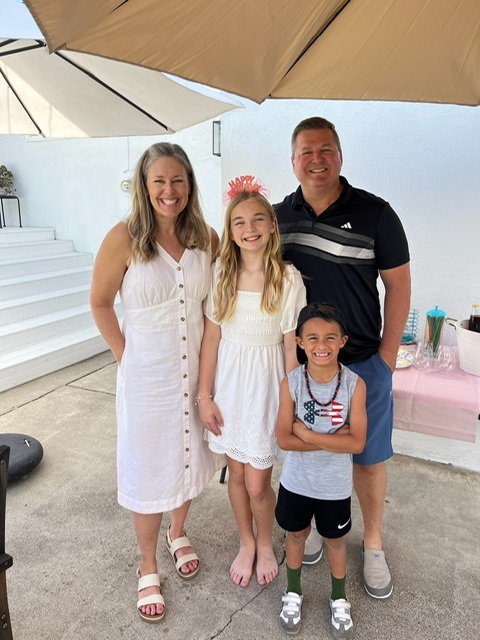
Sara is one of those longtime RF members whose competitive spirit and love for fun always make class more entertaining. Whether she’s tackling a workout or turning a friendly game into a championship match, she brings energy, consistency, and so much heart to our community.
Sara joined RoughFit in the summer of 2014 when she was five months postpartum and looking for a way to get moving again. Since she has always loved being outdoors, RF felt like the perfect fit. From that very first class, she knew there was something special about spending summer evenings running, exercising, and playing outside.
Some of her OG 6 PM friends might remember those early days of disc golf and plenty of “non-competitive” games. Of course, anyone who knows Sara knows there’s no such thing as a truly non-competitive game when she’s involved. Whether it’s Jenga, Spoons, Connect 4, Memory, or Can Jam, she brings just enough determination—and maybe a little contact—to secure the win.
After more than a decade with RoughFit, what Sara appreciates most is the variety. She loves that every class is different and that there are still exercises that surprise her. Like many members, she has experienced seasons when life feels busy or motivation is hard to find, but she says she is always glad she pushed herself to come to class.
More than anything, Sara treasures the community. While everyone comes together to exercise, she says RoughFit feels much more like a team. Members celebrate milestones and achievements, encourage one another, and support each other through every season. It’s these friendships and connections that have kept her coming back for the last twelve years.
Outside of RoughFit, Sara is a former TUSD high school English teacher who was promoted to full-time mom to Elizabeth (12) and Zeke (7). She and her husband, Ryan, celebrated their 20th anniversary in 2025, and together they have built a life filled with family, adventure, and plenty of time outdoors. Living in North Tustin near her parents means grandparents are always just a walk or bike ride away.
The Grextons love loading up the RV and exploring together. From off-road adventures near Death Valley to beach camping in Carpinteria and San Clemente, family trips have become some of their favorite traditions. They also enjoy visits to Big Bear, Joshua Tree, Palm Springs, and the redwoods near Santa Cruz, where they spend their days riding bikes, flying kites, playing cards, watching sunsets, gathering around campfires, and taking walks with their dog, Max.
Sara’s journey is a wonderful reminder that showing up consistently matters more than being perfect. Through busy seasons and changing stages of life, she has continued to invest in herself and the friendships she has built along the way.
We are so grateful for the joy, encouragement, and playful competitiveness Sara brings to the RoughFit family. Thank you, Sara, for twelve years of showing up, cheering others on, and making our community stronger. We’re thankful to have you on the team and look forward to many more workouts, games, and adventures together.


Flexibility Vs. Mobility: What's the Difference?
Flexibility and mobility are often used interchangeably, but they play very different roles in how your body moves and feels. Understanding the difference—and how to train both—can help you stay active, reduce injury risk, and move better in everyday life. Learn how each impacts your movement, performance, and injury prevention, plus simple ways to improve both.

Image by Ryan McGuire from Pixabay
By Terri Lively
You hear us talk about flexibility and mobility all the time in class. But when pressed, can you tell me the difference between these two essential parts of fitness?
If not, don’t worry about it. Let's hope after you read this article, you can.
Today’s newsletter seeks to explain the difference between flexibility and mobility and how they relate to your overall fitness. We'll start with flexibility.
What is Flexibility?
Flexibility is the ability of your joints to move freely and without pain through their full range of motion. It's essential for keeping your joints and body healthy. [1]
Flexibility can differ from person to person, but everyone needs a certain level to stay active and prevent injuries. Factors like being hurt, not being active, or skipping stretching can reduce your flexibility. [2]
Improving Flexibility with Different Types of Stretches
It's important to stretch your muscles regularly to maintain or improve flexibility. Here are the main types of stretches and why they are important:
Static Stretching: This involves holding a stretch for at least thirty and up to sixty seconds at the end of a joint's range of motion. It's ideal for relaxing and loosening tight muscles after exercise or throughout the day.
Dynamic Stretching: These movements gently take your joints through their full range of motion. Before workouts, dynamic stretches increase blood flow and can improve performance.
Myofascial Release (Foam Rolling): Applying pressure to muscle tissues using tools like foam rollers helps them relax. It is best used before dynamic stretching to enhance flexibility and reduce muscle soreness.[3]
There are a few other kinds of stretching. These include ballistic stretching, which involves bouncing at the end of a static stretch. Active Isolated Stretching (AIS) increases the range of motion by holding stretches for two seconds and repeating. There is also Proprioceptive Neuromuscular Facilitation (PNF), which involves alternating between stretching and contracting muscles. [4]
You are likely familiar with the first three because we do them regularly in class. (The other kinds, not so much.) Now, you know why.
Now, let's tackle mobility.
What is Mobility?
Mobility refers to your ability to move purposefully throughout your day. It includes essential skills like physical stamina, strength, balance, coordination, and range of motion, which are crucial for daily activities such as getting out of bed, climbing stairs, walking, or carrying groceries. Mobility helps us perform these tasks and plays a vital role in preventing falls and injuries, especially in older adults. As people age, the importance of mobility becomes more apparent, with a significant portion of those aged 65 and older experiencing some degree of mobility loss. [5]
How Can I Improve My Mobility?
Improving mobility involves regular exercise to enhance strength, stamina, flexibility, and balance. These exercises support the muscles and joints crucial for movement, helping to prevent further loss of mobility. Healthy adults should engage in at least 150 minutes of moderate-intensity aerobic exercise weekly (or 20 minutes a day), along with strength training and balance exercises twice weekly. [6]
Walking, running, cycling, swimming, and even playing pickleball can significantly improve mobility. Strength training using weights, resistance bands, or body weight is also effective, particularly under guidance. [7] In case you were wondering, those of us who lead class are the “guidance” at RoughFit.
The Source of the Confusion
Even though these terms describe different parts of fitness, they are related. This relationship is probably why people get confused.
For example, the soft tissues around your joints—such as muscles, ligaments, and tendons—play a significant role in your flexibility. Without regular stretching, these tissues can tighten over time, reducing mobility.[8] By contrast, consistent stretching and participating in flexibility exercises, like yoga, can improve joint movement and reduce pain, enhancing mobility.[9]
So, as you can see, flexibility and mobility are two different things, but closely related. Flexibility is your joints’ ability to move through the full range of motion without pain and mobility is your ability to move your body around without pain or restriction. Regularly incorporating stretching and exercise into your routine can maintain and improve your flexibility and mobility, keeping you independent and active for longer.
And which of us doesn't want that?
[1] Flexibility (No Date) Sports Medicine: UC Davis Health, Flexibility | Sports Medicine | UC Davis Health. Available at: https://health.ucdavis.edu/sports-medicine/resources/flexibility#:~:text=Flexibility%20is%20the%20ability%20of,joint%20and%20total%20body%20health. (Accessed: 21 August 2024).
[2] Flexibility (No Date) Sports Medicine: UC Davis Health, Flexibility | Sports Medicine | UC Davis Health. Available at: https://health.ucdavis.edu/sports-medicine/resources/flexibility#:~:text=Flexibility%20is%20the%20ability%20of,joint%20and%20total%20body%20health. (Accessed: 21 August 2024).
[3] How to Become More Flexible and Why It’s Important (no date) EverydayHealth.com. Available at: https://www.everydayhealth.com/fitness/how-become-more-flexible-because-yes-its-important/#:~:text=The%20different%20types%20of%20stretches%20to%20improve%
[4] How to Become More Flexible and Why It’s Important (no date) EverydayHealth.com. Available at: https://www.everydayhealth.com/fitness/how-become-more-flexible-because-yes-its-important/#:~:text=The%20different%20types%20of%20stretches%20to%20improve%
[5] Mobility (no date) Harvard Health. Available at: https://www.health.harvard.edu/topics/mobility (Accessed: 21 August 2024).
[6] Mobility (no date) Harvard Health. Available at: https://www.health.harvard.edu/topics/mobility (Accessed: 21 August 2024).
[7] Mobility (no date) Harvard Health. Available at: https://www.health.harvard.edu/topics/mobility (Accessed: 21 August 2024).
[8] Mobility (no date) Harvard Health. Available at: https://www.health.harvard.edu/topics/mobility (Accessed: 21 August 2024).
[9] How to Become More Flexible and Why It’s Important (no date) EverydayHealth.com. Available at: https://www.everydayhealth.com/fitness/how-become-more-flexible-because-yes-its-important/#:~:text=The%20different%20types%20of%20stretches%20to%20improve%20flexibility%20include%20static,muscle%20or%20its%20opposing%20muscle). (Accessed: 21 August 2024).
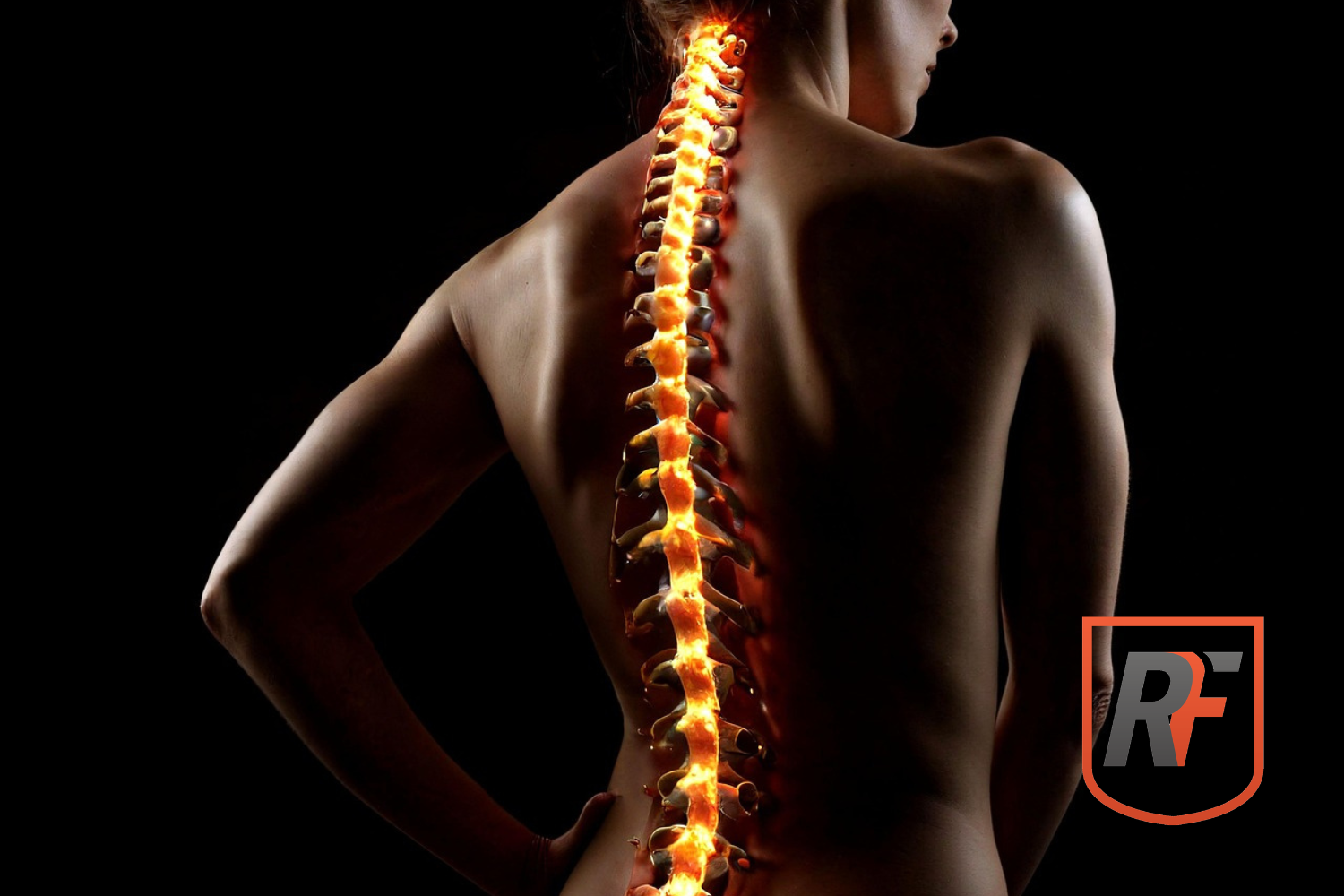
Spinal Extension: The Move Your Back Has Been Missing
If you spend a lot of time sitting or looking at screens, it’s important to include spinal extension—gentle backward arching—into your routine. This simple habit helps counteract stiffness and poor posture from desk work, restores flexibility to your mid-back, and can relieve some types of lower back discomfort. To support a healthier spine, make time each day to reach overhead, look up, or try gentle extension movements such as the Cobra pose or prone press-ups. These small changes help make good posture feel natural and may prevent long-term back issues.
By Terri Lively
If you spend any part of your day sitting, driving, typing, or looking at your phone, your spine is often gently rounded forward. Hours of that add up.
Spinal extension is the opposite motion — the ability to arch backward gently. Think: reaching overhead, looking up at the sky, pressing into Cobra, or standing tall, even after you’ve been folded over a desk all day.
Why Increasing Spinal Extension Helps
It counters desk posture.
The Mayo Clinic notes that prolonged sitting can contribute to stiffness and back discomfort and recommends regular movement and posture changes (“Back Exercises”). Extension is the built-in antidote to hours of forward rounding.
It can ease certain low back discomfort patterns.
The Cleveland Clinic describes extension movements, such as prone press-ups, as commonly used in physical therapy to reduce stiffness and, for some people, relieve symptoms aggravated by sitting (“Cat-Cow Stretch”).
It restores mobility where most adults lose it first.
Most people lose extension in the thoracic (mid-back) spine. When that area stops moving, the neck and low back try to take over—and they usually complain about it (“Thoracic Kyphosis and Mobility”).
It improves posture without forcing it.
Instead of “sit up straight” with tension, extension work gives your spine the mobility that makes upright posture feel natural again.
What Happens When You Lose Spinal Extension
This loss usually shows up as:
Feeling stiff when you stand up after sitting
Neck strain from looking up with your neck instead of your mid-back
Low back tightness after desk work or driving
Rounded shoulders that feel hard to correct
Discomfort reaching overhead
A sense that your back just feels “stuck.”
Research on thoracic mobility shows a link between reduced mid-back extension and higher reports of neck and back discomfort (Katzman et al.). When the mid-back won’t extend, something else takes the load.
That’s the bad news. But I also have great news: You don’t need to do dramatic backbends to fix it. There are plenty of simple ways to increase or bring back your spinal extension. You need frequent, gentle reminders that the extension exists (“How to Improve Flexibility”).
Prone press-ups (McKenzie style)
Lie on your stomach and press your chest up while your hips stay down. This move is a classic extension drill referenced by the Cleveland Clinic for spinal mobility.
Cobra or Sphinx pose
A controlled way to open the front of the body while encouraging spinal extension.
Thoracic extension over a foam roller
Targets the mid-back—the area most people are restricted.
Wall angels
Encourages thoracic extension while improving shoulder mobility and posture.
Glute bridges
Strong hips support safe extension and keep you from jamming into your lower back.
Hourly reach break
Stand up, reach overhead, gently look up, take a breath. Mayo Clinic emphasizes avoiding prolonged sitting for back health (“Stretching: Focus on Flexibility”).
Stretch the front of the body
Tight hip flexors, abs, and chest muscles can all limit extension. Open the front, and the extension gets easier.
Extension should feel like the front of your body opening, not your lower back crunching (Middleditch and Oliver). Think: long and open, not lean back and jam.*
If extension causes sharp pain, tingling down a leg, pinching, or dizziness, pause and get guidance from a clinician or PT.
If you take one thing away from this article, let it be this: you don’t need to perform extreme movements to improve spinal extension. Simple, gentle exercises and frequent reminders to move—like prone press-ups, yoga poses, foam rolling, stretches, and hourly reach breaks—can enhance your spinal mobility and overall back health.
Best of all, you get a spine that remembers how to extend. And remember… a spine that remembers how to extend feels less stiff, less cranky, and a lot more cooperative in everyday life.
* Always prioritize movements that feel open and safe, and consult a professional if you experience pain or discomfort.
Sources:
“Back Exercises: Back Strengthening Exercises.” Mayo Clinic, Mayo Foundation for Medical Education and Research,www.mayoclinic.org/healthy-lifestyle/adult-health/in-depth/back-pain/art-20546859.
“Cat-Cow Stretch: How to Do It and Why It Helps Your Spine.” Cleveland Clinic, Cleveland Clinic,
health.clevelandclinic.org/cat-cow-stretch/.
“How to Improve Flexibility and Why It’s Important.” Cleveland Clinic, Cleveland Clinic,
health.clevelandclinic.org/how-to-improve-flexibility-and-benefits/.
“Stretching: Focus on Flexibility.” Mayo Clinic, Mayo Foundation for Medical Education and Research,www.mayoclinic.org/healthy-lifestyle/fitness/in-depth/stretching/art-20047931.
Katzman, Wendy B., et al. “Thoracic Kyphosis and Mobility: Associations with Pain and Function.” Journal of Back and Musculoskeletal Rehabilitation, vol. 35, no. 4, 2022, pp. 827–836.
pubmed.ncbi.nlm.nih.gov/35864477/.
Middleditch, Alison, and Thomas Oliver. “Functional Anatomy of the Thoracic Spine and Its Role in Movement and Pain.” Journal of Orthopaedic & Sports Physical Therapy, vol. 45, no. 9, 2015, pp. 693–704.
pubmed.ncbi.nlm.nih.gov/25557663/.
Sahrmann, Shirley. “Movement System Impairment Syndromes of the Lumbar Spine.” PM&R KnowledgeNow, American Academy of Physical Medicine and Rehabilitation,
now.aapmr.org/movement-system-impairment-syndromes-of-the-lumbar-spine/.
“The Importance of Thoracic Spine Mobility for Musculoskeletal Health.” National Institutes of Health – PMC, U.S. National Library of Medicine,www.ncbi.nlm.nih.gov/pmc/articles/PMC9487940/.
April Featured Member: Bruce Le
Consistency, effort, and a willingness to show up—even on the hard days—that’s what makes Bruce Le stand out. This month, we’re recognizing not just the work he puts in, but the energy and example he brings to everyone around him.
Meet Bruce Le—one of our most positive, dedicated, and uplifting members in the RoughFit Run Club!
Bruce has been part of the RF community since 2021, after being introduced by his friend Hieu Vu. Outside of fitness, he works as a funder for a private lender, but if you really want to know Bruce, just know this: he loves to eat, dance, and bring good energy wherever he goes (and yes—he’s got some impressive Zumba moves 💃).
From day one, Bruce has embodied what RF is all about. In his very first class, he surprised himself by running 6 miles—even though he had never run more than 3–4 miles before. That moment set the tone for what’s been an incredible journey ever since.
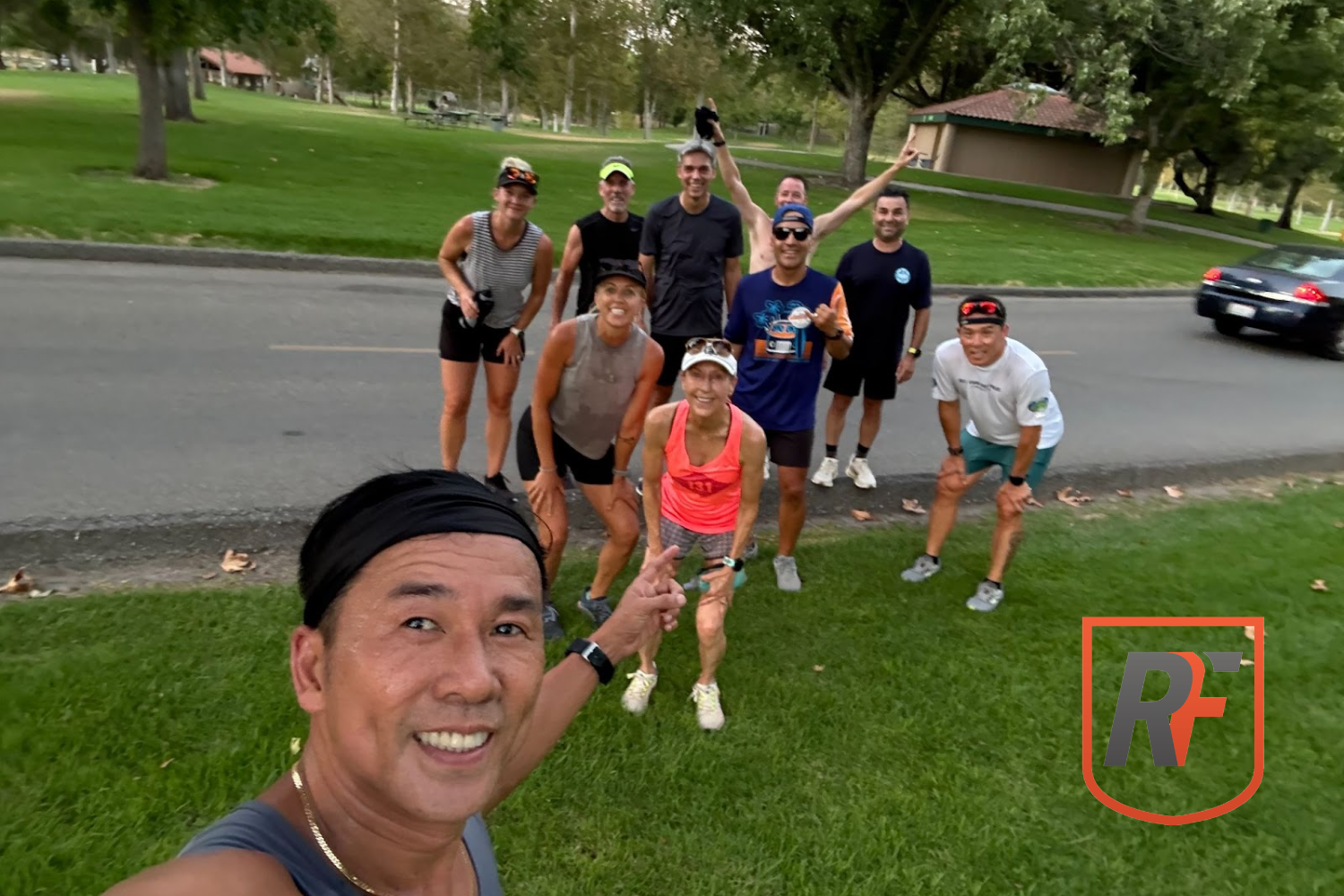
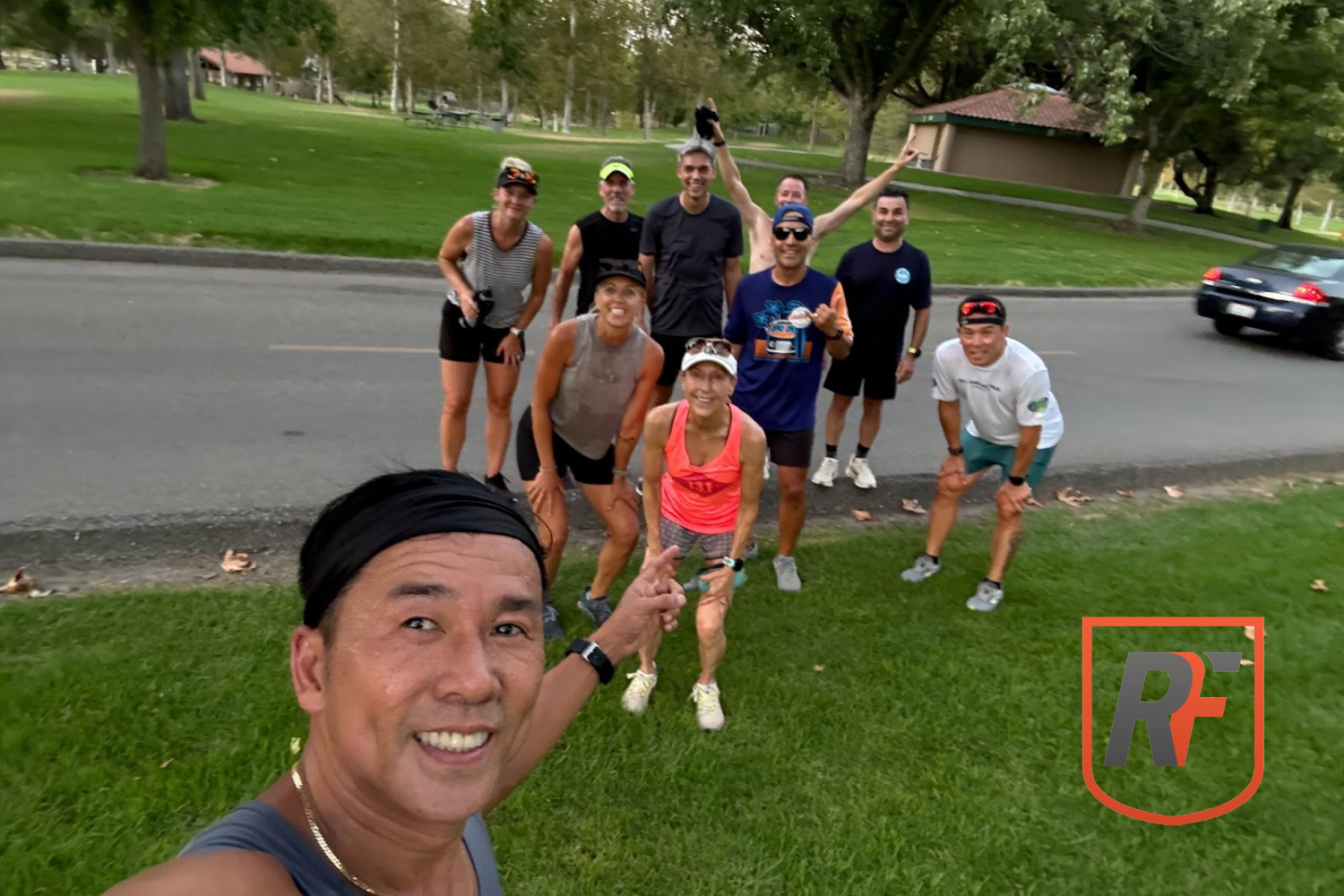
What keeps Bruce coming back? The community. He thrives on running with his RF friends, learning, staying motivated, and pushing each other to get faster and stronger together. And he gives that same energy right back—Bruce is often our unofficial group photographer, always capturing moments from class, cheering people on, and lifting others up.
Since joining RF, Bruce has experienced major physical and mental growth. He’s stronger, happier, and running farther than he ever imagined. His accomplishments speak for themselves—he’s completed three marathons and continues to improve each time:
🏃♂️ First Marathon: 4:10
🏃♂️ Second Marathon: 4:05
🏃♂️ Third Marathon: 3:45
…and he’s just getting started. If you’ve run with Bruce, you know he’s fast—and only getting faster.
When asked what advice he’d give to new members, Bruce keeps it simple:
“Keep coming to class and do what you can.”
He also encourages everyone to get involved: join RF challenges, sign up for races, train hard, and stay consistent.
Above all, Bruce is one of the kindest people you’ll meet. He loves cheering everyone on, celebrating others’ wins, and bringing joy to every workout.
We’re lucky to have you, Bruce—your energy, dedication, and positivity make RF better every day 💙
Stronger Because of Each Other
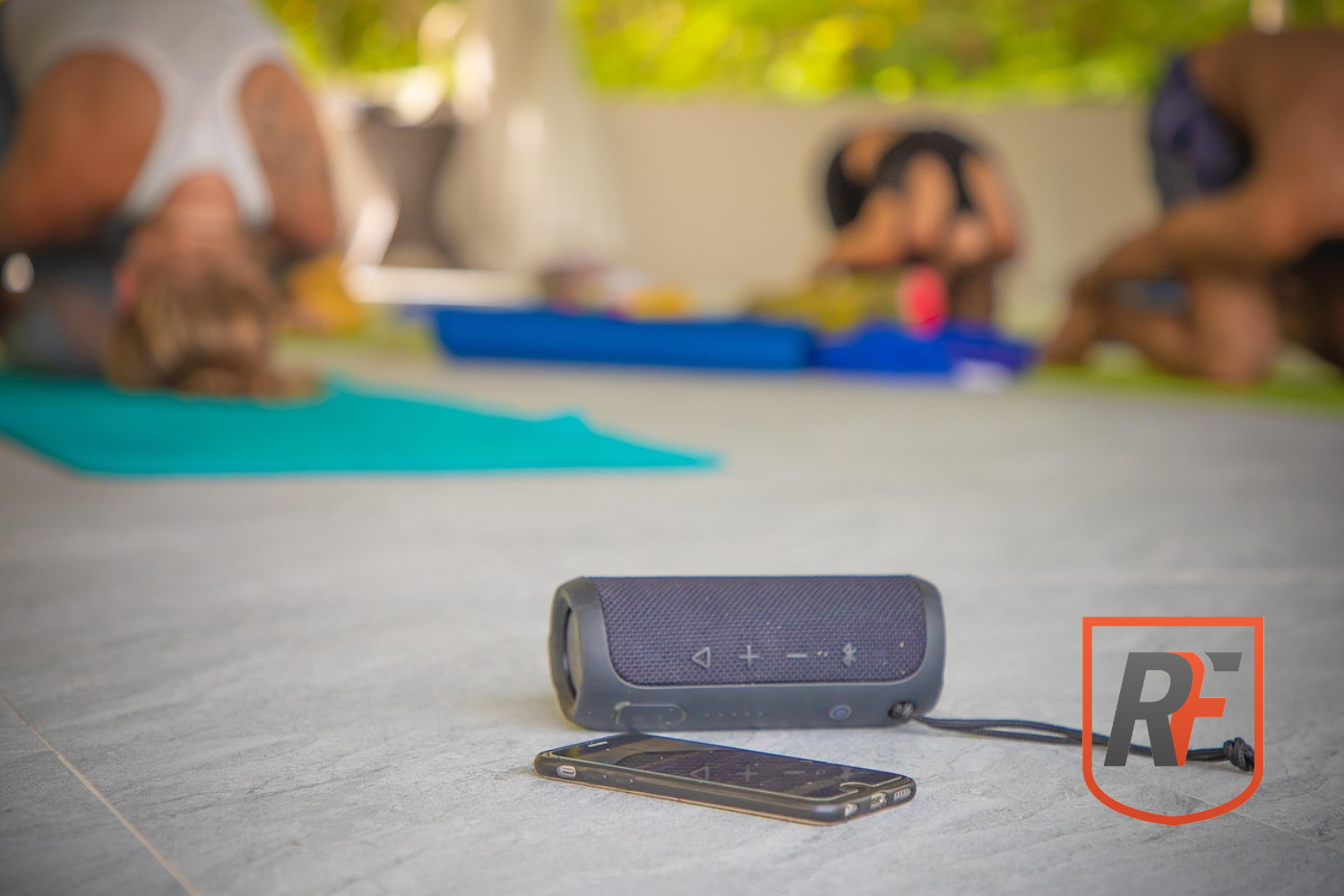
Some days you’re not showing up for the workout; you’re showing up because someone will notice if you don’t. That’s not pressure… that’s community. And it’s exactly what Jenni meant by Stronger Together at the RoughFit Banquet 2026.
By Terri Lively
If you were at the banquet, you probably remember Jenni’s talk, “Stronger Together.”
If you weren’t there, don’t worry, you’ve been living it all year. What Jenni talked about isn’t only a theme for 2026. It’s what happens here every day, whether we stop to think about it or not.
We are not meant do hard things alone, and this is hard both physically and mentally. For example, we have to decide to show up when we don’t feel like it, or when we have knee/shoulder/back pain, or after working an 8+ hour day. That’s not only willpower or discipline, it’s also community.
Another part of Jenni’s talk that stuck with me was the idea of gratitude as a skill, something you practice that changes how your brain handles hard things. It’s a great point. Yes, we train our bodies here every day, but we’re also training our minds. By showing up when we don’t feel like it, encouraging someone next to us, and/or laughing mid-workout because if we don’t, we might cry, we are building resilience. We are also building the kind of mental strength that carries into the rest of your life.
As Jenni said, life is hard, growth is hard, and none of us is designed to do that by ourselves. We need people who notice when we’re missing. People who challenge us. People who pull us back in when we start drifting.
In other words, we need our RoughFit people.
We all have bad days where we fall off track. That’s part of being human. RoughFit kicks in here for us. When one of us falls, someone else is there to lift them; not with a lecture, but something simple like, “See you tomorrow!”
So, RoughFit isn’t only where you come to burn calories and stay fit. It’s where you come to be reminded who you are when you forget a little. It’s where you come to reset, not quit. It’s where you come to be around people who want you to be healthy, confident, strong, and capable.
However, your presence is a gift, too. You are also the reason someone else keeps showing up and feels welcomed. You being here is why this feels like a family, not a fitness class.
So, as we move into this Stronger Together year, let’s keep being that kind of community. Think of one person in your life who would be better, healthier, and happier if they had what you have here and invite them. Not because they need a workout, but because they need a community—and none of us are supposed to do this alone.
March Featured Member: Andy Kratzert
If you've ever heard a perfectly timed dry joke during class or noticed someone quietly putting in the work, you've probably met Andy. Andy Kratzert brings humor, curiosity, and steady consistency to the RoughFit community, and that grounded presence has made him such a valued part of the early morning crew. He and his wife, Viria, joined RoughFit about a year ago after being drawn to the energy of outdoor training, and they quickly felt right at home. Since then, Andy has built strength and kept showing up with the kind of quiet commitment that inspires the people around him.
If you've ever heard a perfectly timed dry joke during class or seen someone quietly getting the work done, you've probably met Andy.
Andy Kratzert brings humor, curiosity, and steady consistency to the RoughFit community. He is half of the 2025 Power Couple with his wife, Viria. Andy and Viria joined RoughFit about a year ago after spotting the sign at Citrus Ranch Park. He jokes that it only took them four months to remember to sign up for the trial. Having previously participated in outdoor fitness while living in Texas, they were drawn to the energy and accountability of training outside. After finally signing up for a trial week, they quickly felt at home.
Born in Downey and raised in Fullerton, Andy attended UC Irvine, where he majored in Computer Science. He has worked as a software developer since the early 1990s. During college, Andy became a Christian and developed a deep interest in theology, biblical prophecy, and Eschatology (the study of end times), a passion that continues today. Andy's favorite teacher was Chuck Missler, the world's best-known Bible instructor and a prominent speaker on Bible prophecy.
He and Viria were married in Costa Rica 17 years ago and even lived there for a couple of years, owning and operating a small coffee shop that Andy jokes "had no customers." The experience deepened their love of travel, with Israel standing out as Andy's favorite destination for its history and significance.
Outside of work, Andy enjoys skiing, kayaking, paddleboarding, and volleyball— although he admits he seldom does any of them. He also enjoys biking, which he does get to do occasionally.
What Andy appreciates most about RoughFit is the creativity and variety of the workouts. While he has equipment at home, the programming challenges him in ways he wouldn't create on his own. He's especially noticed improvements in his core strength, which has supported his overall fitness and daily movement.
Andy's broader health journey includes losing about 40 pounds over a six-to-eight-month period — a milestone that reflects his commitment to consistency and long-term health.
His advice for anyone considering joining RoughFit is simple and practical: prepare in advance.
"Put all the stuff you need in your car so you can just get up and go. Wake up early enough to have some coffee. Get a nice thick mat; the paper-thin ones are terrible."
We're so grateful to have Andy as part of the RoughFit family. His steady effort, thoughtful perspective, and low-key humor make early mornings better for all of us. We love watching him grow stronger each week and can't wait to see what he tackles next.

February Featured Member Marianne Hales
February Featured Member Marianne Hales is a quiet, steady presence in the RoughFit community whose consistency speaks volumes. Since joining in 2019, she has shown up for the 5:45 AM crew with dedication, growing stronger over time and proving that real progress comes from simply sticking with it. Balancing a busy career, family milestones, and early workouts, Marianne is a great example of quiet strength, resilience, and the power of showing up.
February’s Featured Member is someone many of you see every morning at 5:45… quietly putting in the work, never asking for attention, and steadily getting stronger week after week—Marianne Hales.
Marianne joined RoughFit in 2019 after a chance New Year’s Day encounter at Peet’s Coffee. She ran into Jodi, Judy, and Stephanie, who had just finished a hike, and encouraged her to try a class. That one conversation brought her to RoughFit, and she’s been a steady part of the 5:45 AM crew for the past seven years.
What keeps Marianne coming back is the structure, the variety, and the community. She also appreciates having a scheduled class to show up for and loves that the workouts are never the same. Her steady dedication and quiet strength create an inspiring example of the value of consistency and resilience.
Like many RoughFit members, those early days weren’t easy. Marianne remembers struggling to finish a “baby loop” when she first started. Now, she can run a “papa loop,” Showing that steady progress is possible—an encouraging reminder for others to keep going.
Waking up for a 5:45 class isn’t always easy, but Marianne says she has never once regretted finishing a workout. Starting her mornings at RoughFit sets the tone for her entire day, helping her feel focused, accomplished, and ready for whatever comes next.
What comes next is a big job and spearheading big family milestones. Marianne, as Creative Director for Behr Paint, manages a busy schedule while staying creatively engaged. At home, she and her husband are navigating the exciting (and slightly chaotic) season of planning two weddings, showing that balancing fitness, career, and family is possible with dedication.
At this year’s banquet, Marianne received the Quiet Conqueror award—a title that couldn’t describe her better. She shows up. She works hard. She improves steadily. And she does it all without fanfare, simply letting her actions speak for themselves.
Her advice for anyone just starting at RoughFit is simple and sincere:
“Just start. Stay consistent. You won’t regret it.”
Marianne, thank you for being such a steady, positive presence in our 5:45 community. Your quiet strength and consistency inspire more people than you probably realize, and we are so grateful you are part of the RoughFit family.

January Featured Member – Mishelle Shaw
January Featured Member Mishelle Shaw has been part of the RoughFit family for nearly 19 years, and her journey is a beautiful reflection of dedication, growth, and community. A home stager and floral designer with a heart for movement and connection, Mishelle has embraced everything from half marathons and triathlons to healthier nutrition habits, all with the encouragement of the RoughFit community she now considers family. Her story is a powerful reminder that with consistency, support, and a little grace, life-changing growth is possible.
We’re thrilled to kick off 2026 by spotlighting one of RoughFit’s longtime, deeply rooted members—Mishelle Shaw!
Mishelle has been staging homes for over 10 years and is also a talented floral designer, blending creativity and beauty into everything she does. When she’s not working, you’ll likely find her staying active—playing pickleball, gardening, or spending meaningful time with her high school girls at church. Movement and connection are clearly at the heart of her life.
Mishelle has been part of the RoughFit family for nearly 19 years. Her long-term commitment inspires pride and appreciation in the community, showing how dedication can shape a meaningful journey.
What keeps Mishelle coming back? The community. Over the years, the people of RoughFit have become like family, emphasizing the importance of connection and support in our shared journey.
Mishelle credits RoughFit with transforming her in unexpected ways. She never saw herself as a long-distance runner—until RoughFit encouraged and supported her through multiple half marathons and even triathlons. One of her most powerful moments came at the finish line of her very first half-marathon.
“I cried when I finished,” she shares. “It was the realization of what I could accomplish when I truly put my mind to something. That was huge for me.”
Her transformation didn’t stop there. Through encouragement and education at RoughFit, Mishelle made major changes to her nutrition—eliminating dairy, sugar, corn, and wheat—and has become a much healthier eater as a result. Her story can inspire others by showing how small, consistent changes can lead to significant health improvements. She describes the encouragement at RF as nonstop, extending far beyond workouts. Whether it’s fitness, nutrition, or life in general, she says the trainers genuinely want everyone to become the best version of themselves.
When asked about favorite RoughFit memories, Mishelle laughs—there are simply too many to choose from. Game days, races, Joshua Tree climbs, field days, mud runs, banquets, bike rides, Tuesday night run class, and even post-workout coffee (or tea) all hold a special place in her heart. These shared experiences fostered her sense of belonging and community, making her feel truly connected to the RoughFit family.
Her advice for anyone new to RoughFit is heartfelt and wise:
“Keep with it—this will literally change your life in more ways than you know. Give yourself grace. Ask lots of questions. Don’t compare your journey to anyone else’s. And remember—form is everything.”
Mishelle sums it up best in her own words:
“I have loved being part of these beautiful trainers’ and clients’ lives and could not imagine my life without you all.”
Mishelle, we are so grateful for your loyalty, your heart, and the example you set for this community. Thank you for nearly two decades of showing up, putting in the work, and being such an important part of the RoughFit family. 💙💪

Consistency Builds Your Engine
Consistency is what drives real fitness progress. While one workout will not create major change on its own, repeated effort over time helps the body grow stronger, improve endurance, boost energy, and support overall cardiovascular health.
By Jenni Bair Johnson
This month at RoughFit, we’re focusing on something simple but powerful: consistency.
Many of you are already hitting the daily movement benchmark that health experts often recommend—10,000 steps per day. That level of daily movement supports overall health and keeps the body functioning the way it was designed to.
So for March, we’re adding a small challenge to build on that habit:
March Challenge
10,000 steps per day
Add a 1-mile run every day
You don’t need to run fast. The goal is to show up and do the mile.
Why Consistency Matters
In exercise physiology, improvements in fitness occur when the body is exposed to repeated stress followed by adaptation over time. One workout rarely produces major change, but consistent movement signals the body to become stronger and more efficient.
Small, consistent efforts lead to long-term improvements in endurance, energy levels, and overall cardiovascular health. In other words, consistency builds habits, and habits build results.
What Happens Inside Your Body When You Do Cardio
When you perform aerobic exercise like walking or running, your body makes immediate adjustments to meet the increased demand for oxygen. The vascular system responds by redistributing blood flow toward working muscles, allowing more oxygen and nutrients to reach the tissues that need them most (Smith & Fernhall, 2023).
At higher exercise intensities, blood flow to skeletal muscle can increase dramatically while the cardiovascular system works to maintain adequate blood pressure and circulation to vital organs (Smith & Fernhall, 2023). These coordinated responses are part of the reason regular aerobic exercise strengthens the entire cardiovascular system.
Why Heart Rate Matters
Walking is a great foundation for daily movement, but it often keeps the heart rate relatively low for many people. To gain the most cardiovascular benefit, it’s important to also work at a higher intensity that challenges the heart and lungs.
A common guideline for endurance training is to exercise at approximately 65–85% of your maximum heart rate. This range allows the cardiovascular system to work hard enough to stimulate improvements in aerobic capacity, blood flow, and oxygen delivery throughout the body.
Adding a 1-mile run to your daily steps is a simple way to elevate your heart rate into this endurance zone. Over time, training in this range helps strengthen the heart, improve circulation, and increase your body’s ability to deliver and use oxygen during activity.
What Happens When You Do It Consistently
Over time, regular aerobic exercise leads to important long-term vascular adaptations. The body becomes more efficient at delivering oxygen and circulating blood. Research shows that chronic aerobic training can improve endothelial function, increase capillary density, reduce vascular resistance, and lower resting blood pressure (basically, your heart gets a lot stronger!!) (Smith & Fernhall, 2023).
Long-term training can also improve arterial health and reduce arterial stiffness, which is associated with lower cardiovascular risk and better circulation (Shaw et al., 2026).
These adaptations mean your heart doesn’t have to work as hard to do the same tasks. Activities like running, hiking, or even everyday movement begin to feel easier because your cardiovascular system has become stronger and more efficient.
Why The Mile Matters
A single mile might seem small, but done every day, it provides a consistent aerobic stimulus that helps strengthen the heart, lungs, and vascular system. Combined with your daily steps, it reinforces the habit of moving regularly while supporting long-term cardiovascular health. And who knows—after a few weeks, that mile might start to feel easy… and you may find yourself going a little farther. 🏃
Your Goal For March
10,000 steps + 1-mile run - Every day
Simple habits. Consistent effort. A stronger heart.
Let’s keep moving.
Sources
Smith, D. L., & Fernhall, B. (2023). Advanced cardiovascular exercise physiology (2nd ed.). Human Kinetics.
Shaw, I., Mathunjwa, M. L., Black, J., Khanmohammadi, R., Muluvhu, T. C., Brown, G. A., Mukoma, G. G., & Shaw, B. S. (2026). Arterial stiffness adaptations to chronic resistance and aerobic exercise: A systematic review of exercise modalities. Frontiers in Public Health, 13.https://doi.org/10.3389/fpubh.2025.1701763

Muscle Imbalances: Why You Should Know More About These Performance Underminers
Ever wonder why certain movements feel harder than they should, even when you work out regularly? Muscle imbalances may be part of the reason. This article breaks down what they are, how they can affect performance, and a few simple ways to train more evenly.
By Terri Lively
Have you ever wondered why some of your muscles are not in as good of shape as others? Or why you struggle with certain movements in class despite working out at the park every morning or evening you can? It could be a muscle imbalance. Today, we examine muscle imbalances and why they can be a big deal for your overall fitness and health.
What is a Muscle Imbalance?
Muscles have to work together in balance. When one is too weak or strong, there is an imbalance, which can throw everything out of whack.
There are two main types of muscle imbalances:
1. Body muscular imbalance: In this situation, the muscles on one side of your body are different in size or strength compared to the other side. For example, if one arm is stronger, that could be a muscle imbalance.
2. Joint muscular imbalance: Muscles that work together around the joint should have the proper balance of strength and flexibility to keep the joint moving smoothly. If one is too tight or weak, it affects that movement.[1]
Ignoring these imbalances leads to poor fitness outcomes. Even worse than decreased results, muscle imbalances often lead to injury.
How Can I Fix it?
A muscle imbalance doesn’t have to be permanent. Even better, your commitment to comprehensive fitness with RoughFit means you can address it every time you come to class.
You can incorporate several strategies in your workout routine to address and prevent muscle imbalances. Start by foam rolling the overused muscle to release tension. Follow up with static stretching of the same muscles for at least 30 seconds to increase their length. Next, retrain the body and build up the weak muscles with dynamic exercises. These exercises should help align the body properly, improve posture, reduce pain, and prevent injury. [2]
Practice Unilateral Exercises for Body Muscular Imbalances:
Swap bilateral exercises with unilateral ones (like single-arm rows or single-leg squats) to even out your strength on both sides.
Begin your reps on the weaker side before you get tired to ensure proper technique and focus.
Consider performing extra reps or sets on the weaker side for a few weeks to help close the strength gap.
Adjust the weight or intensity on the weaker side to match your strength level and achieve your rep goal.[3]
Follow a Well-Rounded Training Program for Joint Muscular Imbalances
Incorporate a comprehensive strength training program that targets all major muscle groups on your body's front and back sides.
Ensure balance by working opposing muscle groups equally, such as quads and hamstrings, or chest and back.
Include exercises that cover key movement patterns, such as squats, lunges, hip hinges, upper-body pushes, and upper-body pulls.
Consider adding exercises that train muscles in the opposite direction of your primary sport or activity to maintain overall balance and function.[4]
By incorporating these strategies into your workout routine, you can address and prevent muscle imbalances, ensuring optimal strength, performance, and overall health.
Did you know we offer a specialized video analysis designed to pinpoint and correct imbalances? Book a Video Analysis session now to address any imbalances you may be experiencing
References:
[1] Frothingham, Scott. “Muscle Imbalance: Causes, Treatment, and Prevention.” Healthline, Healthline Media, 27 Feb. 2020, www.healthline.com/health/muscle-imbalance#:~:text=The%20muscles%20on%20each%20side,you%20have%20a%20muscle%20imbalance. Accessed 09 Apr. 2024.
[2] Brianne Novaes, CPT. “Chronic Pain from Muscular Imbalances: How to Exercise Correctly to Avoid Pain.” Registered Dental Hygienists, 2023, www.rdhmag.com/ergonomics/article/14280499/chronic-pain-from-muscular-imbalances-how-to-exercise-correctly-to-avoid-pain. Accessed 09 Apr. 2024.
[3] Falk, Megan. “Muscle Imbalances Can Cause Serious Injuries - Here’s How to Prevent Them.” Shape, 26 Dec. 2022, www.shape.com/muscle-imbalances-causes-risks-prevention-6979856. Accessed 09 Apr. 2024.
[4] Falk, Megan. “Muscle Imbalances Can Cause Serious Injuries - Here’s How to Prevent Them.” Shape, 26 Dec. 2022, www.shape.com/muscle-imbalances-causes-risks-prevention-6979856. Accessed 09 Apr. 2024.