
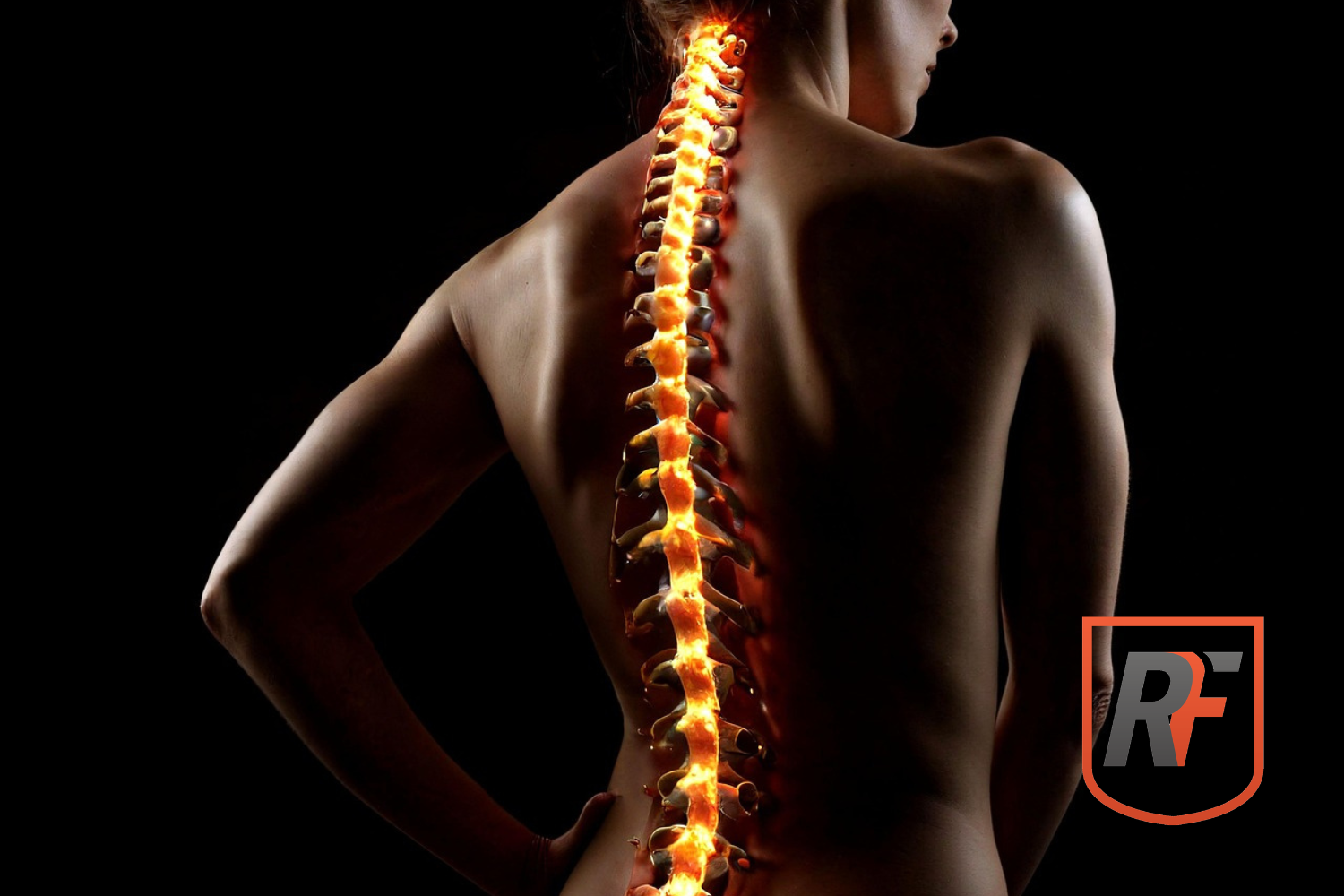
Spinal Extension: The Move Your Back Has Been Missing
If you spend a lot of time sitting or looking at screens, it’s important to include spinal extension—gentle backward arching—into your routine. This simple habit helps counteract stiffness and poor posture from desk work, restores flexibility to your mid-back, and can relieve some types of lower back discomfort. To support a healthier spine, make time each day to reach overhead, look up, or try gentle extension movements such as the Cobra pose or prone press-ups. These small changes help make good posture feel natural and may prevent long-term back issues.
By Terri Lively
If you spend any part of your day sitting, driving, typing, or looking at your phone, your spine is often gently rounded forward. Hours of that add up.
Spinal extension is the opposite motion — the ability to arch backward gently. Think: reaching overhead, looking up at the sky, pressing into Cobra, or standing tall, even after you’ve been folded over a desk all day.
Why Increasing Spinal Extension Helps
It counters desk posture.
The Mayo Clinic notes that prolonged sitting can contribute to stiffness and back discomfort and recommends regular movement and posture changes (“Back Exercises”). Extension is the built-in antidote to hours of forward rounding.
It can ease certain low back discomfort patterns.
The Cleveland Clinic describes extension movements, such as prone press-ups, as commonly used in physical therapy to reduce stiffness and, for some people, relieve symptoms aggravated by sitting (“Cat-Cow Stretch”).
It restores mobility where most adults lose it first.
Most people lose extension in the thoracic (mid-back) spine. When that area stops moving, the neck and low back try to take over—and they usually complain about it (“Thoracic Kyphosis and Mobility”).
It improves posture without forcing it.
Instead of “sit up straight” with tension, extension work gives your spine the mobility that makes upright posture feel natural again.
What Happens When You Lose Spinal Extension
This loss usually shows up as:
Feeling stiff when you stand up after sitting
Neck strain from looking up with your neck instead of your mid-back
Low back tightness after desk work or driving
Rounded shoulders that feel hard to correct
Discomfort reaching overhead
A sense that your back just feels “stuck.”
Research on thoracic mobility shows a link between reduced mid-back extension and higher reports of neck and back discomfort (Katzman et al.). When the mid-back won’t extend, something else takes the load.
That’s the bad news. But I also have great news: You don’t need to do dramatic backbends to fix it. There are plenty of simple ways to increase or bring back your spinal extension. You need frequent, gentle reminders that the extension exists (“How to Improve Flexibility”).
Prone press-ups (McKenzie style)
Lie on your stomach and press your chest up while your hips stay down. This move is a classic extension drill referenced by the Cleveland Clinic for spinal mobility.
Cobra or Sphinx pose
A controlled way to open the front of the body while encouraging spinal extension.
Thoracic extension over a foam roller
Targets the mid-back—the area most people are restricted.
Wall angels
Encourages thoracic extension while improving shoulder mobility and posture.
Glute bridges
Strong hips support safe extension and keep you from jamming into your lower back.
Hourly reach break
Stand up, reach overhead, gently look up, take a breath. Mayo Clinic emphasizes avoiding prolonged sitting for back health (“Stretching: Focus on Flexibility”).
Stretch the front of the body
Tight hip flexors, abs, and chest muscles can all limit extension. Open the front, and the extension gets easier.
Extension should feel like the front of your body opening, not your lower back crunching (Middleditch and Oliver). Think: long and open, not lean back and jam.*
If extension causes sharp pain, tingling down a leg, pinching, or dizziness, pause and get guidance from a clinician or PT.
If you take one thing away from this article, let it be this: you don’t need to perform extreme movements to improve spinal extension. Simple, gentle exercises and frequent reminders to move—like prone press-ups, yoga poses, foam rolling, stretches, and hourly reach breaks—can enhance your spinal mobility and overall back health.
Best of all, you get a spine that remembers how to extend. And remember… a spine that remembers how to extend feels less stiff, less cranky, and a lot more cooperative in everyday life.
* Always prioritize movements that feel open and safe, and consult a professional if you experience pain or discomfort.
Sources:
“Back Exercises: Back Strengthening Exercises.” Mayo Clinic, Mayo Foundation for Medical Education and Research,www.mayoclinic.org/healthy-lifestyle/adult-health/in-depth/back-pain/art-20546859.
“Cat-Cow Stretch: How to Do It and Why It Helps Your Spine.” Cleveland Clinic, Cleveland Clinic,
health.clevelandclinic.org/cat-cow-stretch/.
“How to Improve Flexibility and Why It’s Important.” Cleveland Clinic, Cleveland Clinic,
health.clevelandclinic.org/how-to-improve-flexibility-and-benefits/.
“Stretching: Focus on Flexibility.” Mayo Clinic, Mayo Foundation for Medical Education and Research,www.mayoclinic.org/healthy-lifestyle/fitness/in-depth/stretching/art-20047931.
Katzman, Wendy B., et al. “Thoracic Kyphosis and Mobility: Associations with Pain and Function.” Journal of Back and Musculoskeletal Rehabilitation, vol. 35, no. 4, 2022, pp. 827–836.
pubmed.ncbi.nlm.nih.gov/35864477/.
Middleditch, Alison, and Thomas Oliver. “Functional Anatomy of the Thoracic Spine and Its Role in Movement and Pain.” Journal of Orthopaedic & Sports Physical Therapy, vol. 45, no. 9, 2015, pp. 693–704.
pubmed.ncbi.nlm.nih.gov/25557663/.
Sahrmann, Shirley. “Movement System Impairment Syndromes of the Lumbar Spine.” PM&R KnowledgeNow, American Academy of Physical Medicine and Rehabilitation,
now.aapmr.org/movement-system-impairment-syndromes-of-the-lumbar-spine/.
“The Importance of Thoracic Spine Mobility for Musculoskeletal Health.” National Institutes of Health – PMC, U.S. National Library of Medicine,www.ncbi.nlm.nih.gov/pmc/articles/PMC9487940/.